
"coffee cupping China"
10000 article(s) found

Think deeply | Why does Starbucks have no strong competitors in China?
For professional baristas, follow the Coffee Workshop (Wechat official account cafe_style) Wanda is openly challenging Disney; Uber has invested 2 billion dollars against DiDi; Adidas has been fighting Li Ning and Anta for many years; and Apple is playing a game with many of China's emerging competitors (Huawei, oppo, etc.). One phenomenon always happens in China: a family
Business giants compete to enter: "tea" countries set off a battle for coffee market
In January 2014, Tianjin Goubuli Group announced that it had officially obtained the permanent use right of Australia's largest coffee chain brand, Gloria, in China, and the Chinese time-honored Baozi Shop officially crossed the coffee field. In February 2014, Coca-Cola spent 1.25 billion yuan to acquire China Green Mountain Coffee; in September, Coca-Cola officially entered China's ready-to-drink coffee by releasing its first espresso drink, Qiaoya. people's daily online, Beijing
What does Chinese coffee look like in the eyes of foreigners? Current situation of Coffee Market in China 2
Professional coffee knowledge exchange more coffee bean information Please pay attention to coffee workshop (Wechat official account cafe_style) Coffee was originally used by some high consumers or returnees in China. With the change of time, the domestic coffee market is getting better and better, becoming a necessary drink for leisure and entertainment for most ordinary consumers. So in the eyes of foreigners, the Chinese coffee market

The top ten coffee chains that influence the world are in China.
Top Ten Coffee chains affecting the World since 1999, some international coffee chains, which are regarded as rebels but never lack of ambition, have broken through the shackles and set an example for China's coffee chains. Starbucks has opened more than 430 stores in Greater China, including Hong Kong, Taiwan and Macau, of which about 200 are on the mainland. Cana

From 2012 to 2016, the development of the coffee industry ranked the top five coffee in the world as coffee consumption in China.
From 2012 to 2016, the coffee consumption market entered a period of rapid development. Coffee consumption in Chinese cities, the average annual coffee consumption per person is 4 cups, even in big cities such as Beijing and Shanghai, the annual consumption per person is only 20 cups. In Japan and Britain, each person drinks an average of one cup of coffee a day. Japan and Britain are both famous tea culture countries in the world.

Why is Starbucks in China more expensive than other countries? What's so expensive?
[Starbucks: high price because guests stay for hours] Calver, president of Starbucks China and Asia Pacific, explained that Starbucks China Cafe is much larger than the United States, because most Chinese customers like to stay in the store for a few hours, while 80% of American customers leave as soon as they get the coffee. Imagine if one day you walked into Starbucks and found a large cup.
Annual Summary | Analysis of the Development of Coffee and Coffee Shop Market in China in 2015
If coffee shop operators and retailers do not realize that coffee prices must be reduced, and if they insist on a single marketing model, I do not think China will become the world's largest coffee consumption market in the future.

China's coffee consumption is increasing year by year-the growth rate has been stable at more than 16% in the past decade.
In terms of absolute quantity, coffee consumption in China is still in the doldrums. At present, the scale of the global coffee consumption market is about 12 trillion RMB. The United States is the largest coffee consumption market in the world, with an annual consumption of about 3 trillion RMB, while the coffee consumption market in China is about 70 billion RMB. However, in terms of growth rate, the annual growth rate of coffee consumption in China is about 15%, which is much higher than that of the whole country.
The lineup of judges of the Beijing District of the World baristas Competition (WBC) China selection Competition
The 2015 World Barista Competition China trials is about to start in Beijing! Rekindle the enthusiasm of professional baristas on the road of boutique coffee. The organizers and organizers of this competition have prepared rich prizes for the contestants, and they are more sincere in inviting men, the top professional judges in the coffee industry, to make a big debut for all the partners who love coffee.

China's coffee consumption will maintain an annual growth rate of about 20%
For coffee to be truly successful in China, it will have to convince less-visited regions that coffee can complement or even replace tea, especially for some unique coffee varieties. The Wall Street Journal website once reported that as the economic development slows, China's commodity demand may be slowing down, but in a country with a tradition of drinking tea, coffee is even more expensive.

Coffee chain, smoke in the cup
Coffee chains are springing up like bamboo shoots after a spring rain. Coffee ranks first among the three largest drinks in the world, and it is also the second largest trading commodity in the world after oil. According to statistics, at present, global coffee bean sales are about 8 million tons per year, and maintain an annual growth rate of 2%. China accounts for about 11% of the market sales. At present, the per capita annual coffee consumption in China is only 4 cups, even in Beijing, Shanghai and Guangzhou.
Pacific Coffee Plan China opens 1000 stores to catch up with Starbucks
China Resources Entrepreneurship, which just entered the coffee chain last year, is rapidly enclosing its horses in mainland China. Yesterday, China Resources's Pacific Coffee Beijing International Trade Store officially opened to the public, its 13th direct store since it opened its first mainland coffee chain in Shanghai in April this year. The company plans to expand its mainland stores to 50 by the end of this year. Yesterday, Pacific Coffee first

China's first Brazilian boutique coffee shop landed in Sinan residence in Shanghai
The coffee industry has developed rapidly in China in recent years. According to statistics, China's total coffee consumption has grown at an average annual rate of more than 20% in the past five years. From a world point of view, the average annual consumption of coffee in the world is 250 cups per capita, while that of Chinese mainland is only 4 cups. It can be seen that China is a market with great potential.
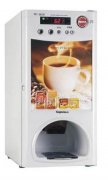
Coin operated automatic coffee machine
Operational advantages: 1, 24-hour unattended, can be completely uncontrolled, automatic selling, automatic coin collection, automatic identification of counterfeit coins, automatic cup drop, automatic counting, automatic timing switch and simple maintenance. 2. It can sell coffee series, various milk tea series, milk, Hot Chocolate Milk and all kinds of fruit juice drinks automatically. 3. It is simple and convenient for consumers to operate, saving manpower and time.

The South China Division of the National barista skills Competition starts in Dongguan
Professional baristas exchange please follow the coffee workshop (Wechat official account cafe_style) 21 baristas compete for tickets to the national competition Dongguan time yesterday, the China baristas skills Competition South China Division Competition opened in Guangdong Vocational College of Innovation and Technology. The competition is hosted by coffee bean branch of China Fruit Circulation Association and coffee industry association of Dongguan City. There are four sub-divisions in this competition.

The Oriental Enlightenment of Coffee
Big players from mature markets, together with growing new forces, are painting a unique ecological picture of this brown powder drink in China in the early winter of 985. Chen Baoqing, who works at Kraft, walked quickly into a foreign hotel in Beijing in the cold wind. He has made non-stop visits to 96 such foreign-related organizations with the strong milky flavor of Maxwell coffee. But in the middle of that time,
Coffee magnate expands four coffee shops in a building in Shenzhen Century of Excellence Center
Yesterday, Li Xianglu, director of Aix Coffee China, revealed that the company has accelerated its expansion this year, with only four stores in Shenzhen at the end of 2011, while six new stores have been opened in Shenzhen so far this year, aiming to open three to four new stores in the fourth quarter. The expansion of Aix Coffee is by no means an exception. Since the beginning of this year, Starbucks, COSTA and other well-known international coffee chains

Starbucks promotes takeout service in China to compete with Luckin Coffee
Professional coffee knowledge exchange more coffee bean information follow coffee workshop (Wechat official account cafe_style) Starbucks' idea of building a coffee empire in China is that consumers here want to be seen sitting in their trendy coffee shops. Now, the Seattle-based company is trying to maintain its position because of local start-up Luckin Coffee (Luckin Co)

The battle between coffee merchants in Shanghai is becoming more and more fierce. Kashijia competes with Starbucks.
In Shanghai today, the smell of coffee is floating in the air. This international metropolis, with a resident population of 25 million, not only has more than 4000 cafes, large and small, but more importantly, chain fast food restaurants and convenience stores have also fully joined the ranks of freshly ground coffee this winter, striving to get a share of the growing coffee consumption market. Behind the competitive layout is the rapid expansion of China's coffee market.

Japanese media: coffee culture takes root in 100000 cafes in China contains great business opportunities
Professional coffee knowledge exchange more coffee bean information please follow coffee workshop (Wechat official account cafe_style) Coffee industry news Japanese media said that coffee culture is taking root in China. It is reported that the number of cafes in China has reached 100000 and is still accelerating its opening. In addition, the bread and cake experience provided with drinks is also very popular. How to grasp the new food culture